01
Guests Are Outdoors When It Hits
Campers are on trails, at the waterfront, and in open fields exactly when storms and flash floods arrive.
Solutions · Youth & Summer Camps
One integrated system for weather monitoring, warning, and alerting — built to meet the toughest state requirements in the country, and every camp’s own best practice, wherever you operate.
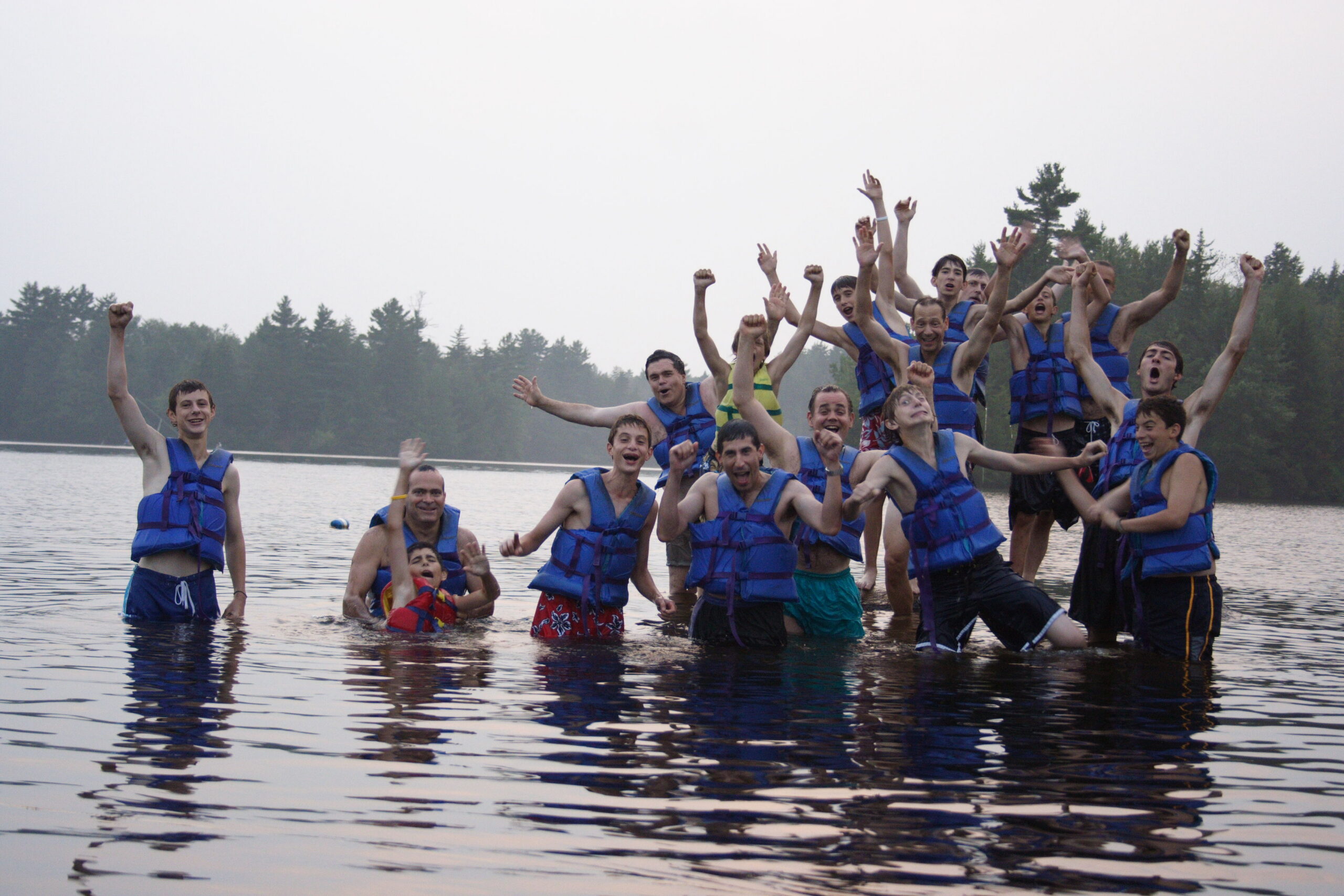
In July 2025, catastrophic flash flooding in the Texas Hill Country claimed more than 130 lives, including campers and counselors at a Central Texas summer camp. The tragedy prompted the fastest wave of camp-safety legislation in the country’s history — and it has changed how camp operators everywhere think about weather preparedness, whether or not their own state has passed a new law yet.
Total Alert Solutions Alliance brings together the weather monitoring, siren, and mass-notification specialists who make that preparedness possible — one coordinated system, not a patchwork of vendors.
The Challenge
01
Campers are on trails, at the waterfront, and in open fields exactly when storms and flash floods arrive.
02
Rapid-onset flooding, tornadoes, and severe storms leave little time to react once conditions turn.
03
Cabins, the dining hall, the waterfront, and remote activity areas all need reliable coverage.
04
When utility power or internet fails, redundant, radio-based alerting has to keep working.
Where the Law Stands
Signed September 2025 (SB1, the “Heaven’s 27 Camp Safety Act,” and HB1, the “Youth CAMPER Act”), with Department of State Health Services rules effective January 2026. Texas camps must maintain an operable NOAA/NWS weather radio and warning system that works without internet, and must automatically shelter-in-place or evacuate the moment the National Weather Service issues a flash flood, flood, or tornado warning for their location. The law also requires layered, redundant warning delivery, so no single failure point can silence a warning.
Signed May 2026 (HB1675), in full effect November 2026. Oklahoma camps must maintain a redundant weather alert system — at least two independent methods, with at least one that works without a cell network — plus a way to notify parents the moment a threat is confirmed.
Signed April 2026 (the Sarah Marsh “Heaven’s 27” Camp Safety Act), compliance required by January 2027. Alabama camps must maintain layered notification systems reaching every area of camp property — cabins, dining hall, outdoor spaces, trails, and waterfront — combining audible outdoor alerting, indoor alerting, mobile notification, and visual signage, all able to function without internet. Required coverage includes severe thunderstorms, tornadoes, flash flooding, and wildfire.
Where the Law Is Headed
These bills are not yet law. We track their status quarterly and will update this page as they move.
Senate Bill 945, the “SAFE CAMPS Act,” was introduced in April 2026 and is currently sitting in a Senate committee. As written, it would require camps to install warning and communication capabilities and trigger their emergency plan directly off National Weather Service warnings — closely following Texas’s approach.
House Bill 3142 did not pass in the 2026 session, but its sponsor has said he plans to refile it after flooding forced a camp evacuation in southeast Missouri in July 2026. As drafted, it would require camps to monitor NWS alerts and maintain weather-emergency communication procedures reaching staff and parents. Missouri currently has no state safety requirement for overnight camps at all.
House Bill 2398 cleared its House committee by a unanimous 26–0 vote in June 2026 and would require flood evacuation plans for organized camps — the most active pending bill outside the three states that have already passed requirements.
No camp-specific weather-safety bill has been filed yet in most states — but neither had Oklahoma, Alabama, or Pennsylvania a year before theirs passed. Every state above followed the same pattern: a serious weather event, followed within months by new legislation. The safest assumption for any camp, in any state, is that this is a matter of when, not if.
Best Practices
The official investigation into the July 2025 tragedy reached an important conclusion: effective emergency preparedness depends on implementation, not just legislation. A written policy on a shelf doesn’t save anyone — a system that’s installed, tested, documented, and actually works during the two or three minutes that matter does. That was true in Texas before the law changed. It’s true in every other state today, with or without one.
01
Sirens, giant voice, and mass notification that reach every cabin and corner the moment a threat is confirmed.
02
Continuous, professional-grade monitoring that triggers your plan automatically, not a consumer app checked between activities.
03
On-site sensors that provide lead time before floodwaters reach camp, not just after.
04
Redundant, layered alerting so a power or network outage never means silence.
05
Documented, engineered coverage and activation logs, ready for a parent, an insurer, or a state inspector to review.
How We Deliver
Outdoor & indoor alerting that reaches every area of camp
LAWS Systems and American Signal Corporation supply NOAA/NWS-activated outdoor sirens, tone and voice messaging, and giant-voice coverage; Cerebral Robotics adds indoor tone/voice panels and integrates equipment from multiple manufacturers into one system.
Continuous, professional-grade weather monitoring
WeatherCall delivers location-specific severe weather alerts sourced from live NWS data, automatically triggering sirens, panels, and notifications the moment a warning is issued for your exact coordinates — through a platform that is both a situational-awareness dashboard and an automated-and-manual device activation system.
Early water-level detection
Cerebral Robotics’ Wireless Watchman connects on-site sensors to two-way radio, email, and other alert pathways, so rising water is detected and reported before it becomes an emergency.
Redundant, multi-channel delivery (works without internet)
The Alliance combines siren, giant-voice, phone, text, and email into one coordinated warning chain — if one channel is down, the others still reach people, with LAWS and American Signal sirens activating directly from WeatherCall’s notifications across every channel.
Engineered, provable coverage
Every siren deployment is modeled in advance with SoundPLAN GIS sound-modeling software, with state-licensed engineering review and completion testing available — so coverage is proven before installation, not guessed at after a failure.
What We Monitor and Alert For
Every alert traces back to an official National Weather Service warning for your camp’s exact location — not a generic county-wide notice.
Meet the Alliance
Total Alert Solutions Alliance unites five specialists, each the leader in their field, plus a referral network of hydrology and engineering partners — together, 220+ years of combined experience.
Premier location-specific, storm-specific severe-weather notification since 2007. 65M+ phone calls and 80M+ text messages delivered. Weather Ready Nation Ambassador and NWS Trusted Partner.
Wireless Watchman, Charlie Ball, and Magic Carpet — sensor-to-action warning, alerting, and intelligence technology.
NOAA/NWS-activated outdoor warning sirens, fixed and mobile, Texas-based, 20+ years of siren engineering experience.
Voice and tone mass-notification design, installation, and multi-manufacturer integration; clients in 27 states.
Giant-voice and electronic sirens, American-made in Milwaukee for 80+ years.
A referral network of hydrology firms for flood-risk modeling, independent engineering review for installation oversight and completion testing, grant writing assistance, and full weather stations and PTZ camera networks.
Why This Matters to You
You’re accountable for every camper’s safety and every parent’s trust — and, increasingly, for a state inspector’s checklist too. One coordinated, engineered, documented system answers both at once, and it’s built to meet or exceed whatever your state requires now or adds next.
Camps in your county are exactly the kind of high-consequence, hard-to-reach population that programs like Texas SB3 are designed to protect. The Alliance’s sensor-to-siren chain — and its “integrate, don’t replace” approach — extends coverage to those properties without building a new system from scratch or duplicating equipment you already own.
A preventable tragedy at a camp in your community becomes your community’s story, whether or not the camp is publicly owned. Supporting camps’ access to a proven, engineered warning system is a low-cost, high-visibility way to protect the families who trust your community every summer — and a defensible, documented decision if it’s ever questioned.
Texas Spotlight
Texas is the most advanced state in the country on camp weather safety — and the clearest preview of where every other state is headed. LAWS Systems, a Total Alert Solutions Alliance member, already holds a statewide cooperative procurement contract (TXShare RFP #2025-086, through August 2030), so qualifying Texas camps can move straight to implementation without running a competitive RFP.
Next Step
We review your cabins, waterfront, trails, and crossings for coverage.
We map your state’s current and pending requirements to your specific property.
Transparent detail on exact equipment and services — no surprises.
Phased to your timeline and your budget.
This page summarizes publicly available legislative and regulatory information as of September 2026 and is provided for general informational purposes; it is not legal advice. Camp operators should confirm current requirements with their state licensing agency or legal counsel. Total Alert Solutions Alliance tracks new and pending state weather-safety legislation on an ongoing quarterly basis.